

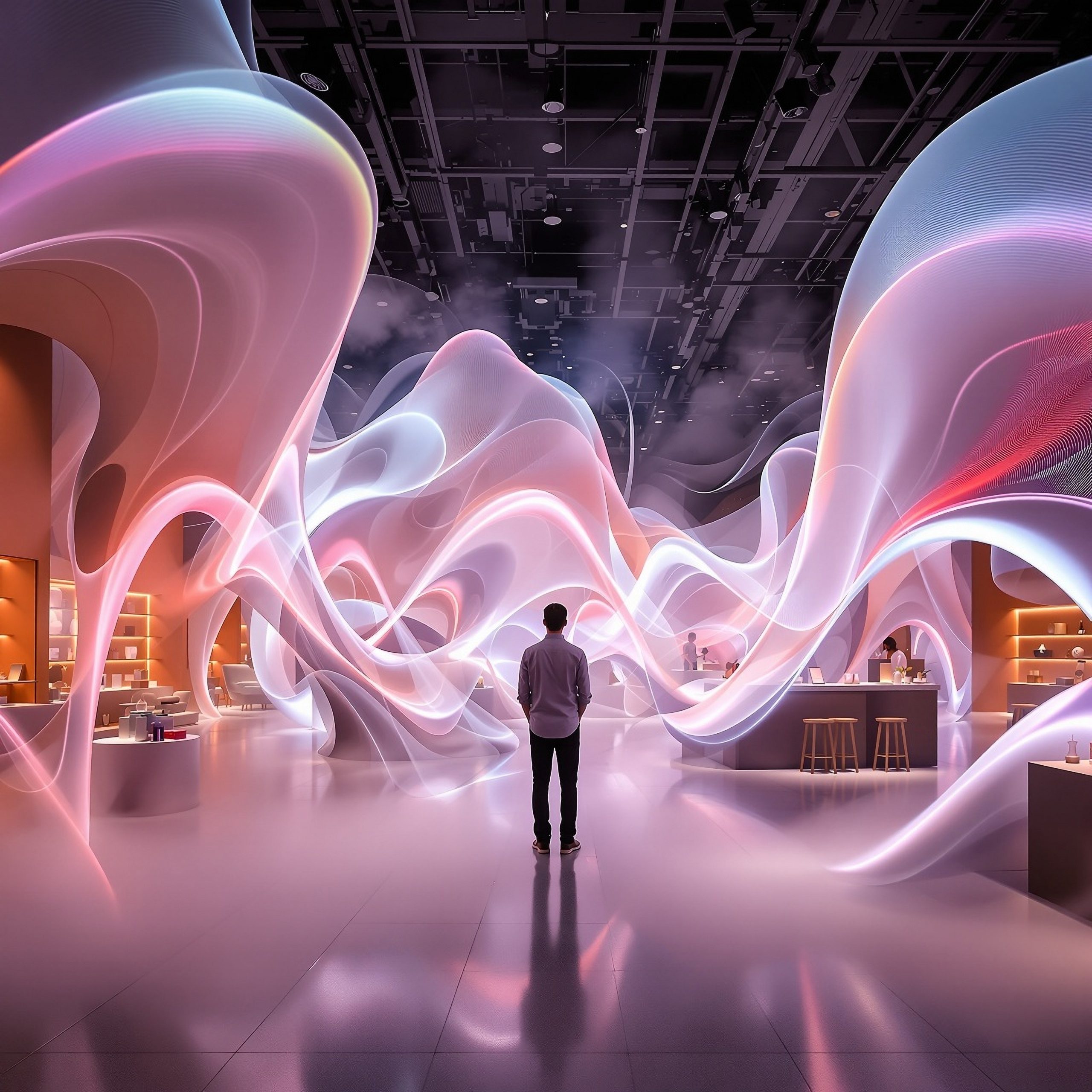
Physical retail is not disappearing. It is changing. The problem for stores today is not traffic alone. It is relevance. People still enter stores, but they no longer respond to product presence by itself. It is no longer enough to be on the shelf. It is no longer enough to have a stand. It is no longer enough to be visible. To matter, brands need to create an experience that stops, explains, and persuades.
Retail is no longer competing only with other stores
For a long time, physical retail was treated as a game of visibility. Whoever had better placement, a better shelf position, and more communication materials had a better chance of selling. That still matters. But it is no longer enough.
Today, the store competes with everything that consumes attention. The phone. Speed. Fatigue. Rush. Lack of patience. Dozens of brands are trying to say the same thing at the same time.
In that context, physical retail can no longer operate solely as a space for exposure. It needs to operate as a space for experience.
What experience really means in retail
Experience does not mean decoration. It does not mean a nice-looking stand. It does not mean an activation that photographs well and does nothing else.
A strong retail experience does three clear things.
It stops attention.
It explains value quickly.
It moves the shopper toward action.
That may mean a strong demonstration. It may mean smart sampling. It may mean a brand ambassador who starts a natural conversation and answers the real question people have: why should I care?
If the activation changes nothing in how the consumer sees the product, then you only have presence. And presence without effect is one of the most expensive illusions in retail.
Why visibility alone is no longer enough
Visibility is the entry condition. It is not the final differentiator.
A product that is seen is not automatically understood. A product that is understood is not automatically desired. A desired product is not automatically purchased.
This is where strong activations matter. They reduce the distance between seeing and deciding.
They make the product clearer.
They make the benefit more concrete.
They make the interaction more human.
They make the choice easier.
Brands that treat the store as a display space fight for shelf centimeters. Brands that treat the store as an experience space fight for attention, memory, and conversion. That is a harder competition, but also a more profitable one.
The role of in-store activation is changing
In-store activation should no longer be seen as an accessory to a campaign. It is not something added at the end just to tick the field execution box.
A good activation is a business tool.
- It can increase trial.
- It can reduce hesitation.
- It can speed up decision-making.
- It can turn an ordinary product into a clear choice.
That requires more discipline in execution.
Sampling should not be treated as a simple distribution. It should be treated as a guided experience.
Promoters should not be trained to repeat scripts. They should be prepared to have useful conversations.
Visibility materials should not only attract the eye. They should support understanding and choice.
What brands and agencies should do differently
If you want physical retail to deliver more, you need to start from shopper behavior, not brand ego.
That means a few simple things.
- Build the mechanic around the real in-store context.
- Explain quickly what the shopper gains.
- Use experience to reduce friction, not create noise.
- Measure not just presence, but real influence on decision and conversion.
The best in-store executions are not the ones that occupy space. They are the ones that make the brand easier to choose.
Conclusion:
The future of physical retail does not depend on more exposure. It depends on better experiences. Stores win when they offer something that a scroll cannot deliver in the same way: human interaction, demonstration, clarity, and confidence. That is where the difference begins between simple presence and real influence on purchase.
![[Noua lume nouă] Ana Voicu: Oamenii vor experiențe clare și chiar scurte, nu mai au răbdare pentru mecanici elaborate sau explicații lungi. Vor sa știe rapid ce primesc și de ce contează](https://tagpromo.agency/wp-content/uploads/2026/03/cover-ana-voicu-cover-850-150x150.jpg)